
For Manhattan parents deciding on orthodontic treatment, the choice matters. You want results that last and care that actually fits your family’s life. Invisalign has become a popular option for younger patients, but is it the right fit for your child? At Seaport Orthodontics, we hear this question often, and the answer depends on several factors. We break it down below.
What Is Invisalign for Children and Teens?
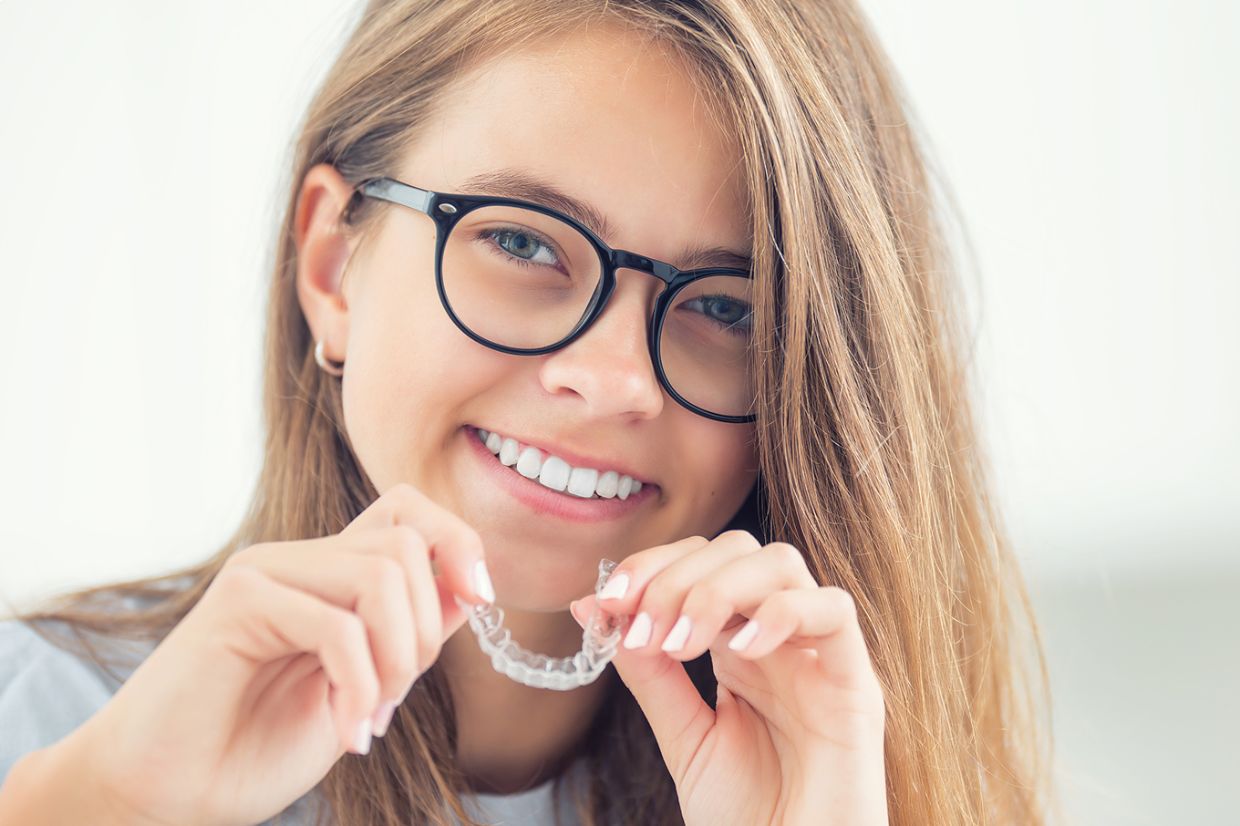
Invisalign for children is a clear aligner orthodontic system that uses custom-made, removable plastic trays to straighten teeth without metal brackets or wires. Available as Invisalign First (ages 6+) and Invisalign Teen, it treats crowding, spacing, and bite concerns in younger patients.
For younger patients, Invisalign offers two specialized treatment lines. Invisalign Teen is designed for adolescents with most or all of their permanent teeth. Invisalign First targets children as young as six who still have a mix of baby and adult teeth, addressing early orthodontic concerns before they become more complex. Seaport Orthodontics offers both Invisalign First and Invisalign Teen, and our orthodontists evaluate each child’s case to determine which system fits best.
Each child receives a new set of aligners every one to two weeks. Every tray is slightly different, moving teeth incrementally toward the planned result. One feature parents appreciate: blue compliance indicators built into the aligners. These small dots fade with wear, giving you a visual confirmation that your child is keeping up with their treatment.
Invisalign can address many orthodontic concerns. Crowding, spacing, overbites, underbites, and crossbites are all treatable with clear aligners when the case is appropriate. The key is matching the right patient to the right treatment, something an experienced orthodontist can determine during an evaluation.
How Does Invisalign Treatment Work for Children?
Invisalign treatment for children begins with a digital 3D scan, followed by custom aligner fabrication. The process progresses through a series of trays changed every one to two weeks at home, with periodic check-ups to confirm everything is on track.
The first visit starts with an advanced 3D digital scan of your child’s teeth. There’s no goopy impression material, no gagging, and no discomfort. It’s fast. The scan takes just a few minutes and gives us everything we need to design a customized treatment plan.
Before a single aligner is fabricated, we map out the entire treatment digitally. You can actually see a simulation of how your child’s teeth will move from start to finish. This level of planning means fewer surprises along the way.
Once the aligners arrive, your child wears them for 20 to 22 hours each day. They come out only for eating, drinking anything other than water, and brushing. This consistent wear is what makes the treatment work.
Check-up visits are scheduled every six to eight weeks. These visits are quick, often lasting just 15 to 20 minutes. We confirm that everything is progressing as planned and provide the next sets of aligners.
For busy Manhattan families juggling school, activities, and work, this reduced frequency can be a real advantage. Treatment duration varies based on the complexity of your child’s case. Some children finish in as few as six months.
Others with more significant alignment needs may wear aligners for 18 months or longer. During your consultation, we provide a realistic timeline based on your child’s specific situation. Every treatment plan is built around the individual, not a one-size-fits-all formula.
What to expect during treatment:
- Initial consultation with digital 3D scan
- Review of custom treatment plan and projected results
- Aligners fabricated and delivered
- Daily wear of 20-22 hours
- Aligner changes every 1-2 weeks at home
- Progress check-ups every 6-8 weeks
- Final results and transition to retainers
Benefits of Invisalign for Children: Why Parents Choose Clear Aligners
Clear aligners offer several practical advantages for children: they’re nearly invisible, removable for sports and meals, and easier to keep clean than braces. At Seaport Orthodontics, families appreciate these benefits across a range of lifestyles and schedules.
Why Are Clear Aligners More Discreet Than Braces?
The aligners are nearly invisible when worn. For children who feel self-conscious about their smile, this can make a meaningful difference. School photos, performances, proms, and everyday interactions happen without the visual presence of metal braces. Many parents tell us this single factor is what first drew them to Invisalign.
How Does Removability Help Active Children?
Taking out aligners for sports, band practice, or a special meal is simple. There’s no need to worry about a basketball hitting a bracket or a trumpet mouthpiece catching on a wire. This flexibility fits the active lives many children lead, especially when extracurriculars fill the calendar.
Does Invisalign Make Oral Hygiene Easier?
Brushing and flossing with braces requires extra tools and extra time. With Invisalign, your child simply removes the aligners, brushes and flosses normally, and puts them back in. Healthy teeth and gums throughout treatment become much easier to maintain.
Does Invisalign Reduce Emergency Orthodontic Visits?
Fewer unexpected visits matter, too. Broken brackets and poking wires are common with traditional braces, and these issues often require same-day or next-day visits to resolve. Invisalign eliminates that concern entirely.
The smooth plastic aligners rarely cause the kind of emergencies that disrupt your schedule. Because there are no wires to adjust or brackets to check, Invisalign visits tend to be brief. You spend less time in the chair and more time getting back to your day. For families balancing packed routines, that efficiency adds up quickly over the course of treatment.
Invisalign vs. Braces for Children: Which Is the Better Fit?
Both Invisalign and traditional braces can achieve beautiful, healthy smiles. The right choice depends on your child’s specific needs, their maturity level, and your family’s priorities.
| Factor | Invisalign | Traditional Braces |
|---|---|---|
| Visibility | Nearly invisible | Visible (metal or ceramic options) |
| Removability | Removable for eating and brushing | Fixed throughout treatment |
| Compliance requirement | High, must wear 20-22 hours daily | None, always working |
| Oral hygiene | Standard brushing and flossing | Requires special tools and techniques |
| Food restrictions | None | Avoid hard, sticky, and chewy foods |
| Emergency visits | Rare | More common (broken brackets, poking wires) |
| Complex cases | Best for mild to moderate concerns | Can address severe malocclusions |
| Very young children | Invisalign First available from age 6 | Often preferred for younger patients |
Invisalign excels in comfort and aesthetics. The aligners are smooth, there’s no metal irritating the cheeks, and the clear material blends with your child’s teeth. For teens who care about their appearance, this matters.
Braces, on the other hand, work continuously without requiring your child to remember to put anything back in. For younger children or those who might struggle with the responsibility of wearing aligners consistently, braces can be the more predictable option.
Some orthodontic concerns respond better to one treatment than the other. Severe skeletal discrepancies, significant rotations, or complex bite concerns may be better addressed with braces. Mild to moderate crowding, spacing, and many bite corrections are well-suited to Invisalign.
Seaport Orthodontics offers traditional metal braces, ceramic braces, and multiple aligner systems. Dr. Alberto Bordonaba, DDS MS and Dr. Zachary DiSpirito, DDS MS use this range of options to recommend the treatment that genuinely fits your child rather than fitting your child into a single approach.
How Much Does Invisalign Cost for Children?
Invisalign for children and teens typically costs between $3,000 and $7,000 at Seaport Orthodontics, depending on case complexity and treatment duration. This range is comparable to traditional braces for similar treatment plans in many cases.
Many parents assume Invisalign costs more than braces. That’s not always true. The specific Invisalign system used, the number of aligner sets required, and the length of treatment all influence the final cost. A straightforward spacing case will fall at the lower end of the range, while a more involved bite correction will trend higher.
Dental insurance often covers Invisalign the same way it covers braces. If your plan includes orthodontic benefits, those benefits typically apply regardless of whether you choose aligners or brackets. We recommend checking with your insurance provider to understand your specific coverage.
Beyond insurance, Health Savings Accounts (HSAs) and Flexible Spending Accounts (FSAs) can also be applied toward Invisalign treatment. These pre-tax dollars can meaningfully reduce your out-of-pocket cost. Our team can walk you through how to use these accounts during your consultation.
Flexible payment options can make treatment accessible even when the upfront cost feels significant. Many practices, including ours, offer in-house financing and payment plans that spread the investment over the course of treatment. The most accurate way to understand what Invisalign will cost for your child is through a consultation. During this visit, we evaluate your child’s teeth, discuss treatment options, and provide a personalized estimate. Initial consultations at Seaport Orthodontics are complimentary.
Is Your Child a Good Candidate for Invisalign?
At Seaport Orthodontics, good candidates for Invisalign include teens with most of their permanent teeth and mild to moderate orthodontic concerns who can commit to wearing aligners 20-22 hours daily. Children as young as six may qualify for Invisalign First if early intervention could prevent more complex treatment later.
Does My Child’s Age and Dental Development Matter?
Teens with most or all of their permanent teeth are often excellent candidates for Invisalign Teen. For younger children, Invisalign First addresses developing concerns before they escalate. An orthodontist can assess where your child is developmentally and whether aligners are appropriate at this stage.
What Role Does Maturity Play in Invisalign Success?
This is perhaps the most important factor. Invisalign only works if your child wears the aligners. A teen who consistently forgets to put them back in after meals won’t see the results they’re hoping for.
Honest conversations about responsibility and commitment help set realistic expectations. The type of orthodontic concern also plays a role: mild to moderate crowding, spacing, overbites, underbites, and crossbites respond well to Invisalign. More severe skeletal concerns or complex tooth movements may require the mechanics that braces provide.
How Does Your Child’s Lifestyle Affect Treatment Choice?
Lifestyle is worth considering, too. Children involved in contact sports, those who play wind instruments, or children who simply don’t want visible braces often thrive with Invisalign. The removability that makes aligners convenient also requires discipline. Manhattan families with active schedules tend to appreciate the flexibility, but that flexibility only works when paired with consistent wear.
Signs your child may be a strong candidate:
- They understand the commitment and feel motivated
- Orthodontic needs fall within the mild to moderate range
- Responsible enough to remove and replace aligners on schedule
- A discreet option matters to them
- Willing and able to wear aligners 20-22 hours each day
Signs braces might be a better choice:
- Severe crowding or complex bite concerns
- Tends to lose things or forget daily responsibilities
- Very young and may not manage removable appliances well
- Your family prefers a “set it and forget it” approach, where treatment works without daily decisions
The only way to know for certain is through a professional evaluation. Our orthodontists at Seaport Orthodontics assess your child’s teeth, bite, and facial structure, then discuss which treatment options would work best.
Frequently Asked Questions About Invisalign for Children
At what age can my child start Invisalign?
Children can begin Invisalign First as early as age six, when they still have a mix of baby teeth and permanent teeth. This early treatment addresses developing concerns and can simplify future orthodontic work. Invisalign Teen is designed for adolescents with most of their permanent teeth, starting around age 11 or 12.
What happens if my child loses an aligner?
It happens. Contact Seaport Orthodontics right away. Depending on where your child is in their treatment, we may have them move to the next set of aligners or order a replacement. Keeping the previous set as a backup is always a good idea.
Can my child play sports with Invisalign?
Absolutely. Aligners can be removed for athletic activities. For contact sports, we recommend taking them out and wearing a protective mouthguard. Non-contact activities are usually fine with the aligners in.
How do I make sure my teen wears their aligners?
The blue compliance indicators on Invisalign Teen aligners fade with wear, giving you a visual check. Beyond that, establishing a consistent routine helps. Aligners go back in immediately after eating and brushing. Setting phone reminders can also keep your teen on track. Open communication about the importance of wear time reinforces the commitment.
Does Invisalign hurt?
Mild pressure or tightness when starting a new set of aligners is normal. That sensation actually indicates the aligners are working. The discomfort fades within a day or two. Unlike braces, there are no sharp edges or wires to irritate the mouth.
How often does my child need to visit the orthodontist during treatment?
Every six to eight weeks. These visits are brief and focused on confirming that treatment is progressing as planned. The reduced frequency compared to traditional braces is one reason busy families appreciate Invisalign.
Choosing orthodontic treatment for your child is a decision that deserves careful thought. Invisalign offers a discreet, flexible option that works well for many children and teens, but it’s not the right fit for everyone. A thorough evaluation with an experienced orthodontist is the best way to know whether your child is a candidate.
Dr. Zachary DiSpirito, DDS MS and Dr. Alberto Bordonaba, DDS MS at Seaport Orthodontics in Manhattan take the time to understand your child’s needs before recommending a treatment path. No two smiles are alike, and the care we provide reflects that. A complimentary consultation can help you explore whether Invisalign is the right choice for your family.
If aligners are not the right fit yet, compare them with braces for kids in Manhattan.