Often, yes. When jaw pain, clicking or limited opening is driven by how your teeth and jaws fit together, an orthodontist can evaluate the bite with imaging and treat the underlying alignment. Not every case is orthodontic, so the evaluation comes first.
What Is TMJ/TMD and What Does It Feel Like?
TMJ refers to the temporomandibular joint, the hinge just in front of each ear that lets you open, close and slide your jaw. TMD, temporomandibular disorder, is the umbrella term for problems in that joint and the muscles around it. People use the two interchangeably, but the distinction matters: everyone has a TMJ, and only some people have a TMD.
Common symptoms
The complaints we hear most often are clicking or popping when opening, soreness in front of the ear after a long meal, aching in the temples by late afternoon, and a jaw that feels tired rather than sharply painful. Some patients notice one side wearing faster than the other, or that they cannot bite cleanly into a sandwich anymore. Locking, where the jaw catches and will not open or close fully, is the symptom that needs attention soonest.
What a flare-up looks like day to day
Flare-ups are rarely constant. They follow load: a stressful week, a long stretch of clenching at a laptop, a dental appointment that kept the mouth open, a new gum habit. Patients describe chewing on the other side for a few days, avoiding bagels and steak, and waking with a stiff jaw that loosens by mid-morning. Tracking when it worsens is genuinely useful diagnostic information, because a pattern tied to clenching points somewhere different than pain that started after an injury.
When Is Jaw Pain a Bite Problem?
This is the question that decides whether orthodontics is the right tool. The joint sits at the end of a chain that includes the teeth, and how the teeth meet determines the path the jaw travels thousands of times a day.
Signs the bite is involved
A crossbite that forces the jaw to shift sideways to close, a deep bite where the lower teeth disappear behind the uppers, an open bite that leaves the front teeth doing no work, a midline that has drifted off center, or wear facets concentrated on a few teeth all point toward the bite. So does pain that appeared as the teeth crowded or after a tooth was lost and the neighbors drifted. In those cases the joint is compensating for a mechanical problem, and correcting the alignment with orthodontic treatment addresses the cause rather than the symptom.
Signs it probably is not
Plenty of jaw pain has nothing to do with alignment. Pain that started after a fall, a sports impact or a car accident is a joint injury. Morning headaches with heavy wear across every tooth often trace to nighttime grinding, which may be sleep-related. Generalized joint pain elsewhere in the body, or pain that moves and burns rather than aching with use, can point to arthritis or a nerve problem. In those cases we say so, and our TMJ and TMD treatment page explains how we handle the evaluation when the answer is not orthodontic.
How Do We Evaluate Your Jaw at Seaport Orthodontics?
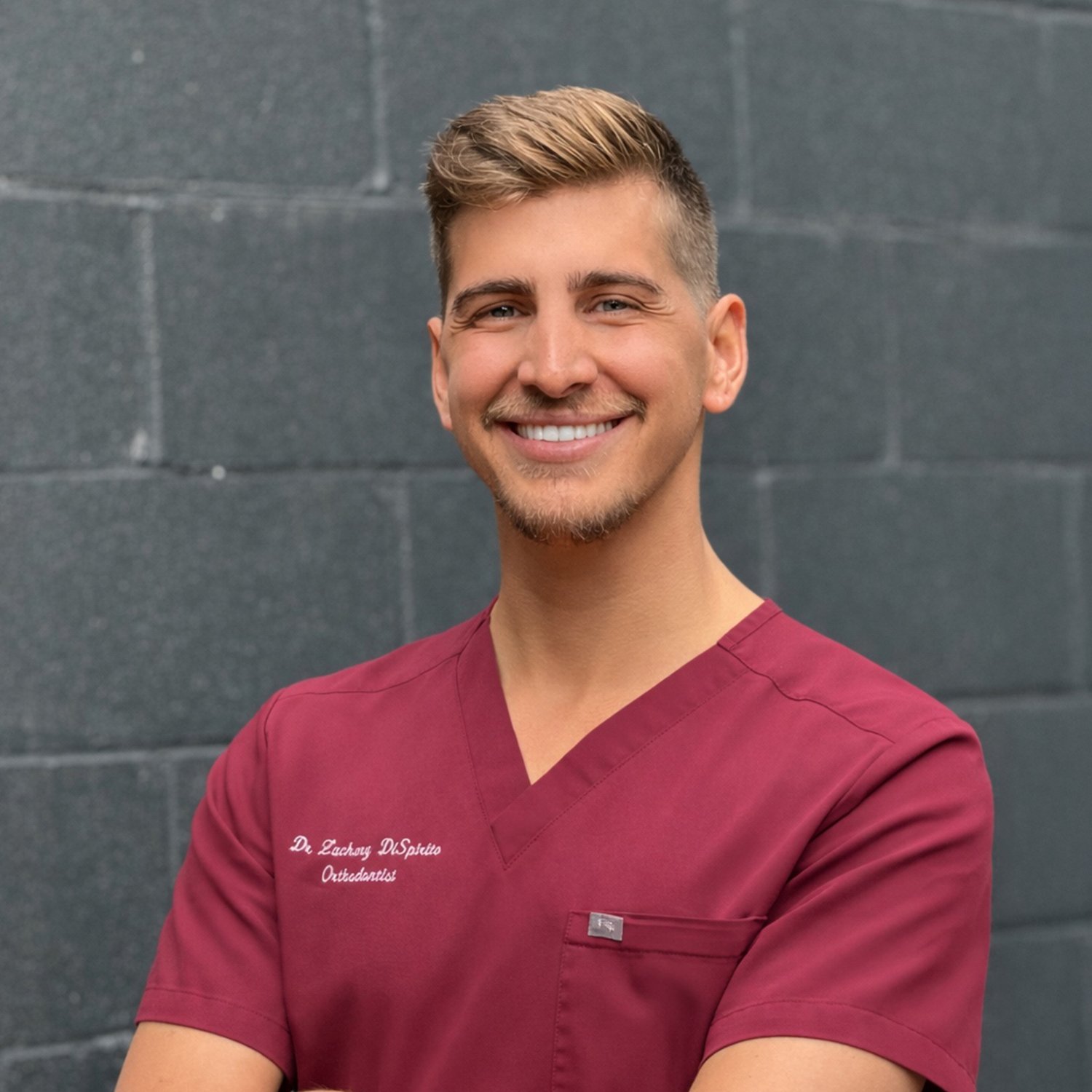
An evaluation is a physical exam plus a records set, and it is the only honest way to answer whether treatment will help. Dr. Alberto Bordonaba and Dr. Zachary DiSpirito both see these cases, and the evaluation is the same either way.
Exam and history
We start by listening to how the problem began and what makes it worse. Then we measure how far you can open, watch the path your jaw takes on opening and closing, palpate the joint and the chewing muscles, and check for deviation, tenderness and joint sounds. We look at wear patterns on the teeth because they record years of function that you cannot feel.
CBCT imaging and digital records
We take a digital scan with our iTero Lumina so we can study the bite outside your mouth, and CBCT imaging when we need to see the joint and the roots in three dimensions. CBCT shows the shape and position of the condyle, asymmetries between sides and bone changes a flat X-ray hides. Together those records tell us whether the joint is structurally healthy and the bite is the problem, or whether the joint itself has changed.
Building the plan
Once we have the records, digital treatment planning lets us test the correction before committing to it: where each tooth needs to go, whether elastics or auxiliaries are required, and how the bite will close at the end. If the plan does not convincingly improve the bite, orthodontics is not the answer and we tell you that instead of starting treatment. You can read more about the doctors on our meet our doctors page.
What Treatment Options Exist?
There is no single TMD treatment, and the useful question is which approach fits what your records show. Most plans combine a short-term way to reduce load with a longer-term correction if the bite is driving the problem.
| Approach | What it addresses | Typical role |
|---|---|---|
| Bite correction with braces | Crossbite, deep bite, open bite and shifted midlines that force the jaw off its natural path | Primary treatment when records show alignment is the cause |
| Bite correction with clear aligners | Mild to moderate bite discrepancies in adults who need a discreet option | Primary treatment for suitable cases, planned in Invisalign, Spark or Angel Aligners |
| Appliance and retainer-based management | Clenching load and stability after treatment | Supportive, before, during or after alignment work |
| Co-management with your dentist or a physical therapist | Worn or cracked teeth, muscle tension, posture and habit patterns | Alongside orthodontics, or instead of it when the cause is not the bite |
Some patients also ask about the other procedures we offer alongside alignment; our other treatments page covers those.
What Can You Do Before Your Visit?
None of this replaces an exam, and none of it is medication advice. It is what patients tell us helps while they wait for an appointment.
Soft-food and jaw-rest habits
Give the joint less work for a week or two. That means smaller bites, cutting food instead of tearing it, skipping gum and chewy bagels, and keeping your teeth apart when you are not eating. Lips together, teeth slightly apart is the resting position you want; most people who clench are surprised how often their teeth are touching.
Heat, posture and screen setup
Warmth on the muscles in front of the ear can ease the ache. Posture matters more than people expect: a laptop set low pulls the head forward and loads the jaw for hours. Raise the screen, use a headset instead of cradling a phone, and take breaks during long calls. If you clench while concentrating, put a note on your monitor.
What to write down before the appointment
Bring specifics. When it started, which side, whether it clicks, locks or both, what you were doing before a flare-up, how wide you can open, whether you grind at night, and any prior dental or jaw treatment. A two-week log of flare-ups is more useful to us than a general description, and it shortens the path to the right plan.
Does Correcting the Bite Actually Reduce Jaw Pain?
This is the fair question to ask before committing to a case that lasts months. The answer depends entirely on whether the records showed a mechanical cause, and it is worth understanding what changes and what does not.
What changes when the bite fits
When the teeth meet evenly, the jaw closes along one repeatable path instead of sliding around an interference. That removes the daily compensation the muscles were making, and muscle-driven soreness is usually the first symptom to ease. Patients who came in because their jaw ached by the end of the workday tend to notice that first, often well before the case finishes.
What improves slowly, and what may not
Joint sounds are less predictable. A click that comes from a disc that moves out of position may quiet down, or it may persist even when the bite is corrected and the pain is gone. Structural change inside the joint from an old injury or arthritis does not reverse because the teeth were straightened. We say that plainly at the consultation rather than implying orthodontics is a cure for every jaw complaint.
Why we treat habits alongside alignment
Clenching and grinding load the joint regardless of how well the teeth fit. If you are grinding through a stressful quarter, correcting a crossbite will not stop the clenching, so the plan includes the habit: awareness during the day, a retainer or appliance at night where appropriate, and coordination with your dentist if the teeth are already worn. Patients who address both get the most durable relief.
How we track progress during treatment
We do not rely on memory. At each visit we recheck opening range, tenderness and the path of closure, and we note whether flare-ups are getting less frequent and shorter. That record is how we decide whether the plan is working or needs a change, and it is also how we know when to stop adding interventions because you are already comfortable.
Jaw Pain FAQs
Will braces fix my TMJ?
Braces can resolve jaw pain when the pain comes from a bite problem, because correcting the bite removes the compensation the jaw was making. They are not a treatment for joint damage, arthritis or injury. The records tell us which situation you are in.
How long does treatment take?
Bite correction is typically measured in months to a couple of years, depending on how far the teeth need to move. Comfort often improves before the case finishes, but we plan to the correction rather than to the first relief.
Should I see a dentist or an orthodontist first?
If a tooth hurts, is cracked or is sensitive to cold, start with your dentist. If the pain is in the joint or muscles, the jaw clicks or locks, or your teeth do not seem to fit together, an orthodontic evaluation is the right first step. We coordinate with your dentist either way.
Is a consultation free?
Yes. The initial consultation is complimentary, including the exam and a straight answer about whether orthodontics will help your case.
If your jaw has been aching, clicking or catching, get it looked at before it becomes a habit you work around. Seaport Orthodontics is at 264 Water St. #1M, New York, NY 10038, with hours Wednesday 8:00am to 4:00pm, Thursday 11:00am to 7:00pm and biweekly Saturdays 9:00am to 2:00pm. Call (917) 830-9638 to schedule a complimentary evaluation.